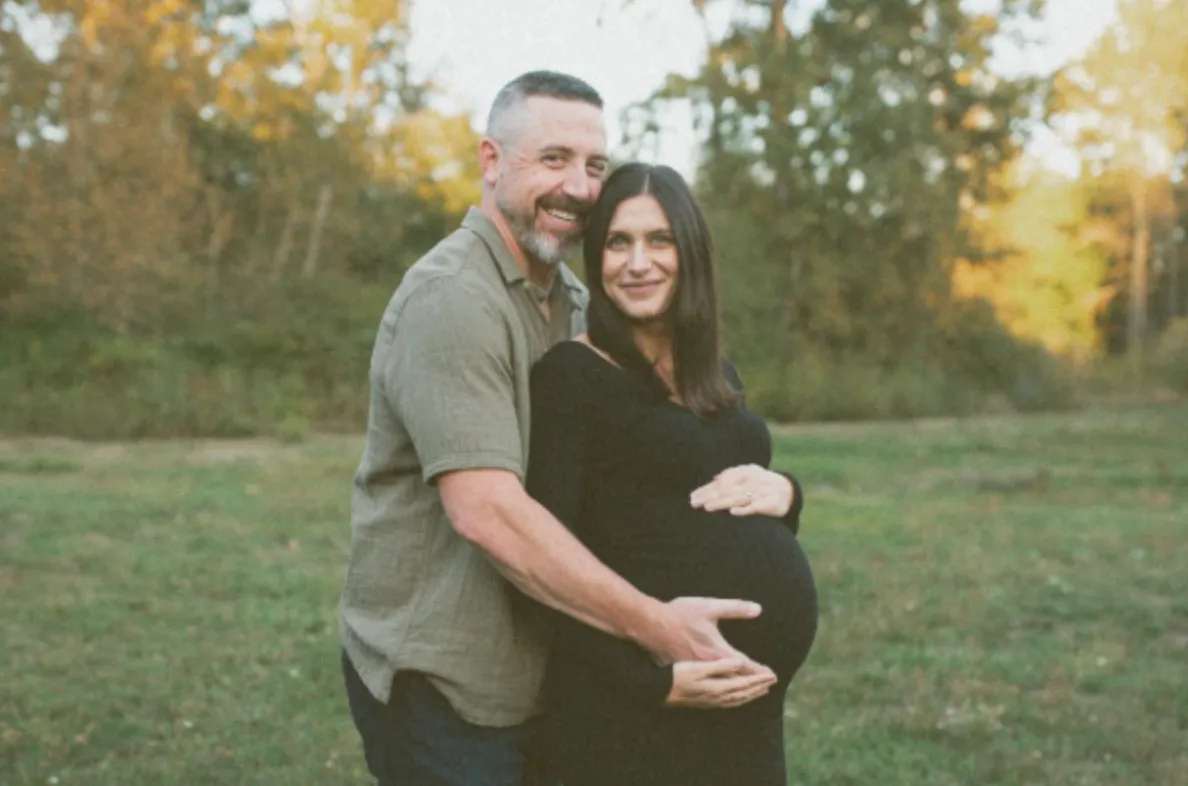

Lisa March was newly married, working for a top-15 employer, and had strong health coverage when she was diagnosed with early-stage breast cancer in June 2020. Lisa spent more than a month self-advocating for scans and tests, and finally received her diagnosis after a biopsy. While the medical news was terrifying enough on its own, a second question surfaced alongside it: what would treatment mean for her ability to have children?
"Our hopes and dreams of having a family in the future were not only put on hold, but very much a question mark," Lisa shared in a recent webinar with Maven and Color Health, a virtual cancer clinic.
Lisa's journey reveals a gap that most benefits leaders don't know exists — pairing cancer care alongside fertility preservation. This practice, known as oncofertility, is a growing area in benefits design, yet many programs weren’t built to address in tandem.
“Historically, cancer was viewed by employers as a later life health issue. But that assumption is no longer reflecting what is happening in the workforce,” Dr. Ashley Speckhart, survivorship physician and medical oncologist with Color Health, said in the webinar. “For many employees, fertility decisions are no longer separate from cancer treatment. They are happening at the same time, often immediately after diagnosis during a time of intense emotional and clinical pressure. That pressure creates a very different healthcare experience than most employer benefit systems were designed to support.”
The data points to this increasing gap: A new survey by Maven Clinic and Color Health found that 85% of respondents reported seeing an increase in cancer diagnoses among employees under 50 in the last three years. Among those cases, two-thirds involved fertility preservation or family-building considerations.
Explore the full report from Maven Clinic and Color Health
Lisa said she was presented with fertility options in her first appointment, but navigating the intersection between oncology, reproductive endocrinology, hormone treatment, and everything in between was "a full-time job in and of itself.” Over the course of the next year, Lisa went to more than 100 appointments.
“We felt really alone in navigating all of this. I had health plan coverage for cancer treatment. I had good medical plan coverage, and I had a financial benefit that covered fertility," she said of her employer before Maven. "But the navigation of all of those things, understanding exactly what was covered, was all upon me as the employee."
Today, Lisa is Maven's VP of Employer Growth, and now spends her days helping employers design better benefits for the people going through similar journeys. The type of support Maven and Color offer today would have been transformative for her then, she said.
"Navigating all of this in real time, with really high-stakes decisions and a lot of underlying anxiety, was really hard," Lisa said. "The onus shouldn't be on the individual and the patient who's already going through so much."
Why timing changes everything
When someone receives a cancer diagnosis, the clock starts immediately.
Many cancer treatments render survivors infertile, which means the window to preserve fertility often has to close before treatment even begins. In clinical practice, that window can be as short as 30 days, and ASCO — the world's leading oncology professional organization — recommends that fertility be discussed within 24 hours of diagnosis, with the conversation continuing throughout care. Yet nearly half of benefits leaders surveyed were unaware that 1 in 5 young cancer patients modify their treatment plan after receiving fertility counseling — which means the stakes of getting this right extend well beyond the benefit itself.
Lisa said that while her oncologist brought up fertility options in their first appointment, there's so much a patient needs to understand and navigate immediately. A newly diagnosed person needs to simultaneously understand whether their treatment will affect their fertility, evaluate preservation options like egg, sperm, or embryo freezing, coordinate care across two different medical specialties, clarify what their benefit covers, and make decisions that will shape the rest of their life — all while processing a diagnosis that just upended it.
“I am one of the lucky ones who had a care team that shared that this was an important consideration very early and that we were actually able to model my treatment plan with oncofertility in mind versus it being an afterthought,” Lisa said.
Yet even with this integrated approach, the stress took its toll. Lisa said the experience felt like a “marathon.”
"On a good day, any type of IVF or assisted reproductive technology is stressful. On a good day, cancer is stressful. And so marrying those two together in almost a pressure cooker environment was a lot," she shared. “There needs to be additional support that helps navigate that individual from start to finish. What I felt was lacking was coordination and continuity of care between these two very stressful situations.”
What employers and employees actually need — and how maven and color fill the gap
Maven, the world's largest virtual clinic for women and families, and Color, which built the first virtual cancer clinic to receive ASCO certification, offer an oncofertility program that brings both organizations' clinical capabilities into a single, coordinated experience.
Members have immediate access to a dedicated virtual care team spanning oncologists, reproductive endocrinologists, dietitians, mental health providers, and care advocates who understand both sides of the journey and can move at the pace it demands. Maven's model has demonstrated strong clinical and financial outcomes across women's and family health — including $9,600 in savings per birth, 27% lower NICU admission rates, and 15% lower C-section rates. Color's clinical model has demonstrated a 66% faster time to diagnosis, a 77% increase in screening adherence, and $23K in savings per patient during active treatment. Together, they offer a level of clinical integration that neither cancer nor fertility benefits alone can deliver.
“Not only is this partnership deeply meaningful to me as a human, but my team works with total rewards leaders worldwide on bringing inclusive, dynamic, and clinically driven benefits to their teams and having this pairing of two very, very challenging diagnoses happening at the same time is going to be a game changer for so many people,” Lisa said.
When considering any benefit that addresses fertility and cancer care, it’s critical to consider these three pillars:
- Benefit design — is your fertility coverage built with this population in mind? Does it cover preservation before treatment begins, or does it require an infertility diagnosis the employee doesn't yet have?
- Network access — employees in this situation need to be navigated to clinics with genuine oncofertility expertise, not routed to a standard fertility center through a general referral process, and they need that referral to happen at speed. A week's delay in a situation like this can be the difference between preservation being possible or not.
- Care coordination — someone needs to own the handoffs, and that someone can't be the employee. It needs to be a dedicated team with expertise in both cancer care and fertility who understand the clinical intersection and can move at the pace a cancer diagnosis demands.
This care coordination also extends well beyond the immediate treatment window. Lisa, who now has an 8-month-old, shared that her journey is "never over."
"The need for this care, the integration, the support doesn't stop when your last radiation treatment occurs or you get the call that you've achieved a pregnancy," Lisa said. "It really is lifelong."
Maven's partnership with Color is available through employers and health plans today. Talk to a Maven specialist to learn how the integrated oncofertility pathway works — and whether it's right for your organization.
Ready to get started with Maven?
See how Maven can support working families, retain talent, and reduce costs

.jpg)

.jpeg)

.jpg)

.jpg)