

For someone managing a complex health condition, a medical appointment is often just one part of the experience. There are symptoms to manage between visits, questions that arise after consultations and new health concerns that may be connected to something that happened years earlier. Patients are often left to connect the dots themselves.
“I found a lump at home… and after weeks of advocating, I finally got in to see doctors and was put through the ringer: scans, biopsies, and landed myself a breast cancer diagnosis,” Lisa March, Maven’s VP of employer growth, shared at Onward, Maven’s inaugural conference held last month. “I had over 100 in-person appointments, …and I was really vulnerable and scared. That's when I really reflected and said, ‘How can this be that I can have the best possible team and still feel so under supported?’”
Read more from Onward:
- Metabolic health, ROI, and the role of AI in healthcare: 4 trends shaping the next decade of women's health
- How Maven, Color, and Wellthy create real platform integration to support the full spectrum of care needs
- How GLP-1s fit into a more connected approach to women’s and metabolic health
March was joined by three other Maven members who previously had their concerns dismissed, or were left to navigate complex care needs with little support. Now with Maven, they’ve discovered providers who take the time to understand their wider health needs — and created a continuous relationship instead of brief interactions through one-off appointments.
When the health system doesn't see the whole person
For Apoorva Joshi, spending more than a decade seeking help for endometriosis left her feeling hopeless, she said. She repeatedly heard that her symptoms were normal and something she needed to live with.
“At one point they even start telling you that it's all in your head,” she recalled. “When you hear it enough times from medical professionals who have trained for years to treat this condition, you start thinking that OK, maybe it is.”
Living with endometriosis affected far more than Joshi's physical health. The pain made it difficult to work, maintain relationships, or imagine what her future might look like.
“At one point I gave up. I thought, maybe I'm not going to get better,” she said. She eventually began working with Maven, and the impact was immediate.
“All the providers could read each other's notes. For example, when I went to a nutritionist on Maven, she had put a note on improving my gut health. And when I went to see a mental health provider, she could already see that physically I was struggling with so many things, and there was so much anxiety. All of these providers knew what was happening behind the scenes, [which] enabled them to offer me better care.”
LeCrea Burns also experienced dismissal and frustration with her care team, before being paired with Maven OBGYN Dr. Stacey Fine. After having her son following infertility and miscarriage, she began experiencing symptoms that were difficult to distinguish between postpartum changes and perimenopause. Some doctors attributed those symptoms to aging. But when she connected with Dr. Fine through Maven, her concerns were taken seriously.
“Dr. Fine reminded me that my symptoms were not imaginary,” Burns said. “In that moment where the doctors were passing me around, it was the perfect place to feel grounded.”
Dr. Fine also encouraged her to pursue appropriate follow-up care, including a mammogram. Burns recalled that the screening helped identify a small abnormality that couldn't be detected through a physical examination. That abnormality was breast cancer — initially diagnosed at stage one, it had progressed to stage two within 45 days.
“I was having a tough time with all of it, and Dr. Fine reminded me that I was a person,” Burns said. “It was just great to find a doctor who could go beyond the call of duty.”
For Burns, having someone who listened and encouraged further investigation made a significant difference. Dr. Fine subsequently helped her interpret medical results and navigate the unfamiliar terminology that came with cancer treatment.
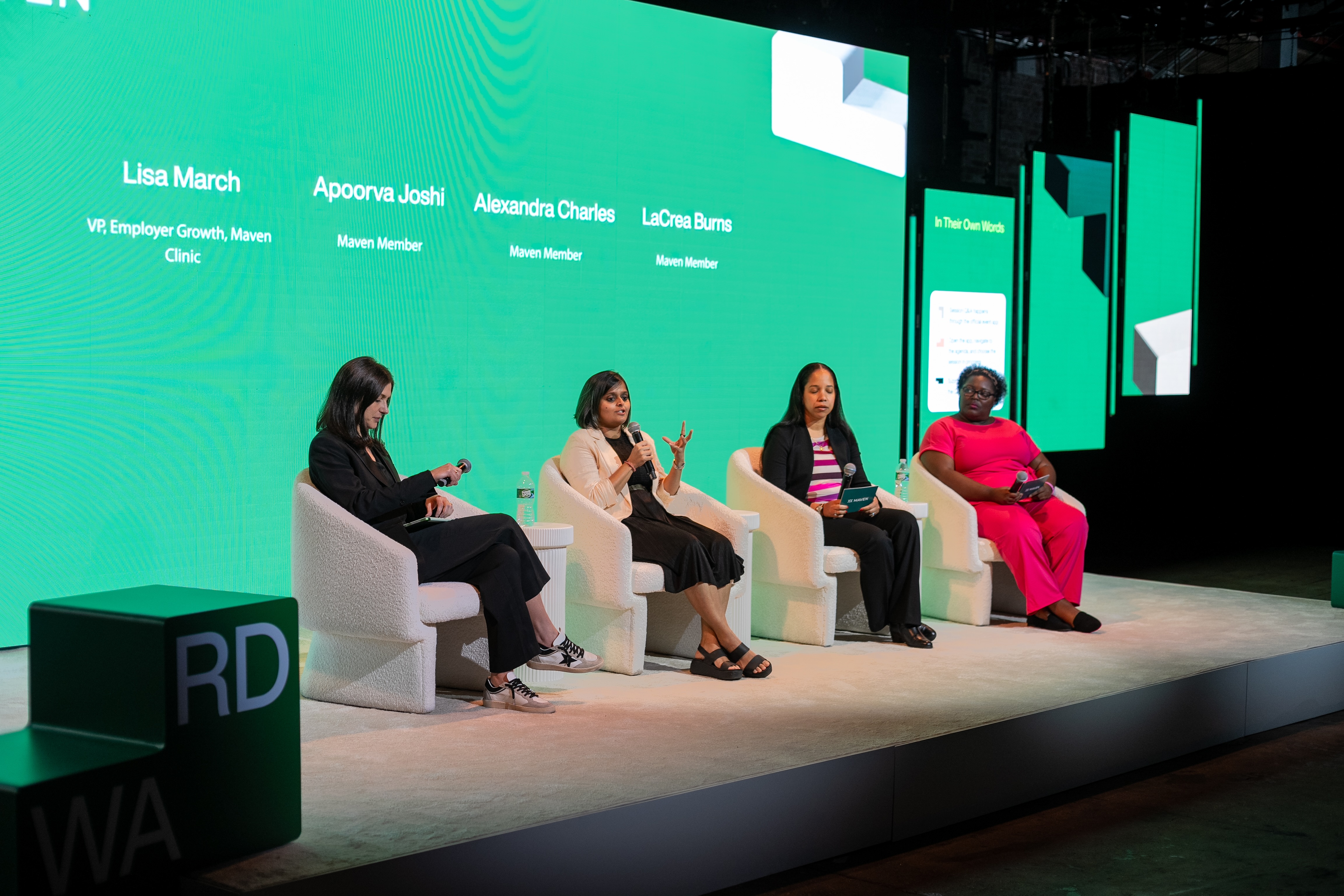
Why continuity matters more than any single appointment
As the conversation moved from diagnosis to ongoing care, March highlighted a fundamental problem with traditional healthcare.
“So much of healthcare is built around a transaction,” she observed, whether that's a scheduled mammogram, Pap smear or wellness appointment. The result can be an experience that's episodic rather than continuous.
Once Joshi began working with Maven and saw how her care team interacted with each other, she found that providers could consider her health history alongside the immediate reason for her appointment.
She also challenged the idea that what happens during a consultation is necessarily the most important part of someone's healthcare experience. Citing a statistic that 80% of outcomes depend on what happens outside appointments, Joshi stressed the importance of the experience between visits when it comes to improving outcomes.
That support from Maven during those in-between times helped Alexandra Charles manage the anxiety she had during her fertility and pregnancy journey.
“When you're in the appointment with the doctor, you have high anxiety. There's a lot of things that may not come to you right then,” Charles said. “But what do you do between that current appointment and the next appointment in order to learn more? And how do you know what are the right questions to ask when you go to your next appointment? Maven helped me with all those questions.”
The providers who stayed through every chapter
Continuity doesn't always mean seeing the same specialist for every health concern. Sometimes, it means being able to maintain relationships with trusted providers as needs change.
Charles initially joined Maven while trying to conceive. She expected to use the fertility program and then move on. Three years later, she was still using the platform, having progressed through pregnancy, postpartum and parenting.
“I don't consider it, even though I've been through so many of the different tracks, to really be a handoff,” she explained.
One example was her relationship with Heidi, a sleep consultant she first worked with after her son was born. Charles continued consulting Heidi as her son grew, rather than finding someone new when she moved into parenting and pediatric care.
Another was Erica, a provider who combined mental health and lactation expertise. Charles explained how valuable that was during a difficult postpartum period, particularly after her son spent time in the NICU.
“I could talk to one person that could help my whole self,” she said. “I didn't have to spend the time rehashing and talking about the same situation with two people. So I would say that that was probably one of the most defining moments.”
That relationship continued beyond postpartum. When Charles recently lost her grandmother, she reached out to Erica through Maven. Although Erica's schedule was full, she made time to speak with her.
Burns described a similar relationship with Dr. Fine, who remained involved as her needs changed from postpartum and perimenopause to cancer treatment. Alongside helping Burns understand her diagnosis, Dr. Fine provided guidance through the physical changes associated with treatment. Burns also worked with a counselor to navigate the emotional aspect of cancer, including the impact it had on her identity and relationship with her working life.
“Trying to navigate the loss of yourself — you're recreating who you are,” Burns said. “It’s a level of support that goes beyond what you expect from people with medical degrees.”
These weren't relationships that ended when one particular health issue was resolved. They continued as new challenges emerged.
What this means for employers
Towards the end of the discussion, Burns shared the moment that best captured what continuity had meant to her.
After completing chemotherapy, radiation and a further year of treatment, she had rung the bell marking the end of each stage, expecting that to be the end of that healthcare journey.
“I felt I should be feeling better,” she recalled. “And when I wasn't, Dr. Fine did not say, ‘OK you're all good. Have a nice life.’” Instead, her provider recognized that recovery and the longer-term effects of treatment still needed attention.
“This is when the real work happens — after all the bells have been rung,” Burns said.
For benefits leaders, her experience illustrates why the value of women's and family health benefits cannot be measured solely through individual consultations or program utilization. An employee may initially need fertility guidance, then maternity and postpartum care. Someone managing menopause symptoms may also be navigating a serious health diagnosis. And a person who has completed treatment may still need ongoing physical and emotional support.
The question is whether those needs are treated as separate episodes or whether employees can maintain relationships with providers who understand their history as circumstances change.
The experiences shared at Onward demonstrated what that continuity can mean in practice: fewer repeated explanations, more informed conversations, and trusted professionals who remain available beyond any single appointment.
For employers, investing in connected care means looking beyond the number of programs offered and considering what happens between them — particularly when employees need support that doesn't fit neatly into one category.
Contact Maven to explore how connected women's and family healthcare can support your employees across different life stages.
Ready to get started with Maven?
See how Maven can support working families, retain talent, and reduce costs


.jpg)