Women’s and family healthcare is often organized around individual events: a check-up, a procedure, a pregnancy or a claim. But life rarely works that way; trying to conceive can lead to fertility treatment, followed by pregnancy, postpartum recovery, and the needs of parenting. Years later, the same person may be navigating menopause while caring for children or aging parents.
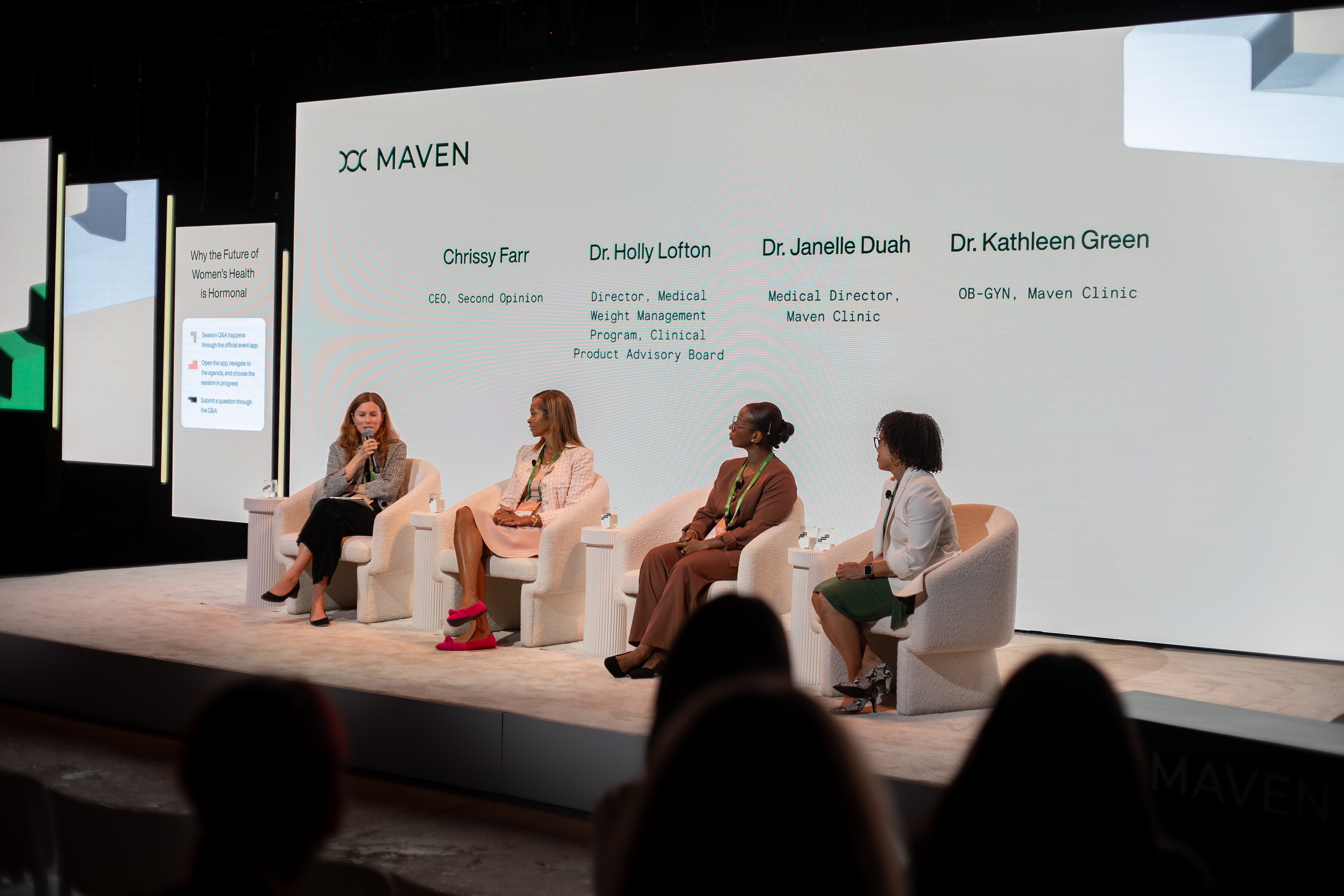
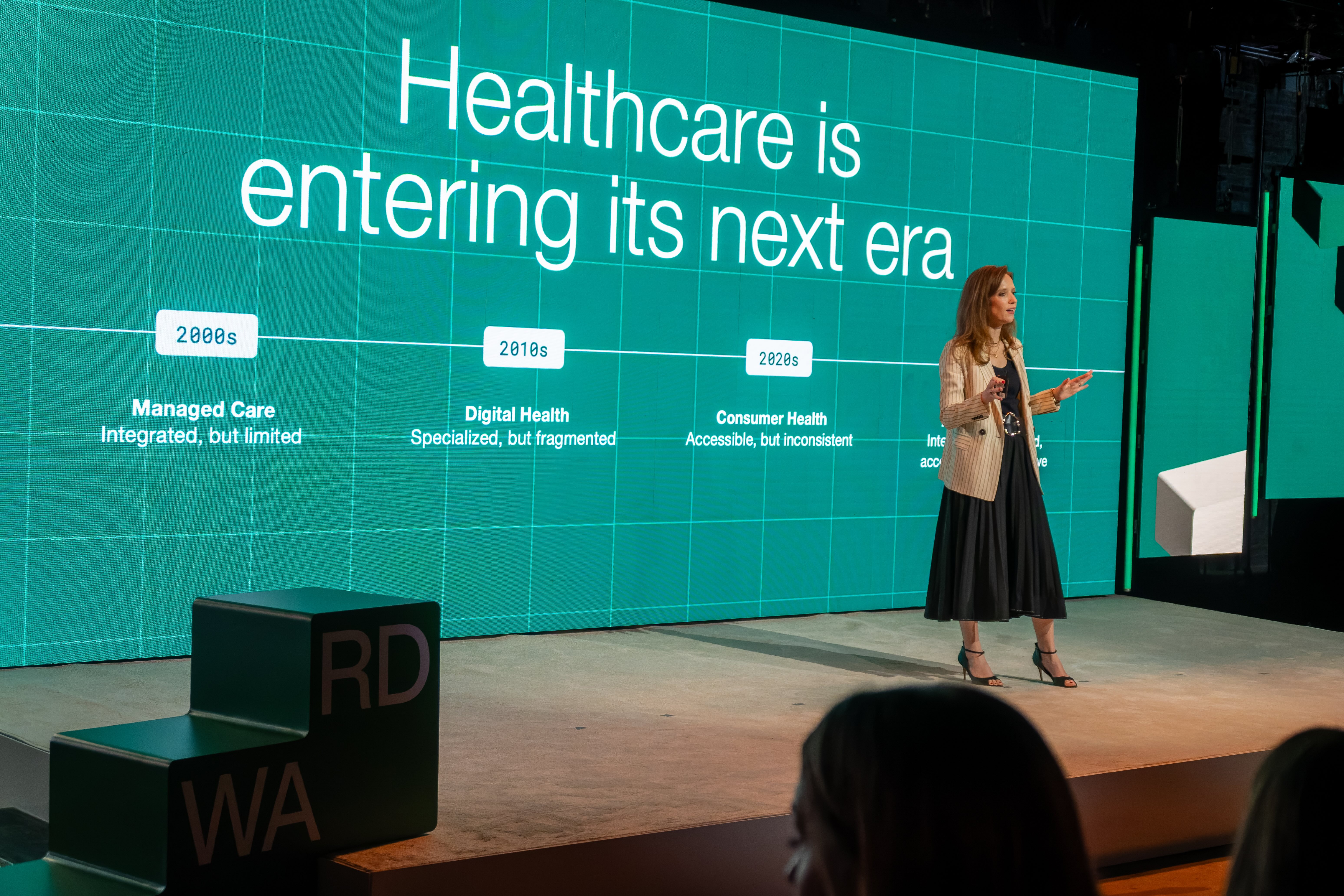
For employers, that means the benefits employees need can change significantly over the course of their working lives, and they need a platform that evolves alongside them. Leaders from Microsoft, L’Oréal North America, the National Women’s Soccer League (NWSL), and United Talent Agency (UTA), shared how their long-term partnerships with Maven have evolved over the last decade, and how they’ve benefited from that support, at last month’s inaugural Maven conference, Onward.
“When I was trying to conceive, it took about five years, and I wasn't working at UTA at the time,” shared Lucy Avsharyan, Vice President of Benefits at United Talent Agency. “I remember Googling IVF because that's the time that I was living in. I just remember thinking, I can't believe there's not enough people talking about this, and not enough support around this. Fast forward to UTA, they said, "Hey, we want to know how we can show up for our women.” Maven was the solution because it did everything from fertility to maternity at the time.”
Avsharyan eventually used Maven through IVF and pregnancy, including support from a lactation consultant and sleep coach after having her twins. It’s shaped how she now thinks about her own role as a benefits leader, and has made her aware of the future needs of her team, too.
“I was at a healthcare conference a couple of years ago and I thought, "Oh my God, no one's talking about [menopause],” she said. “A week later, my Maven rep said, "We're launching menopause. We want that one point solution, one stop shop thing. My employees already built their trust with Maven, so I’m all in.”
Employees remember when employers show up
The need for benefits can begin before an employer knows anything has changed. Stephanie Kramer, Chief Human Resources Officer at L'Oréal North America, saw this firsthand while researching her book, Carry Strong: An Empowered Approach to Navigating Pregnancy and Work, for which she conducted four quantitative studies of 1350 individuals and additionally interviewed more than 250 inspiring women to share their stories of the journey to parenthood in the workplace.
“One out of two women said that trying to become pregnant — and not yet being pregnant — had an impact on their work,” Kramer said. “So that's 50% of people that you have no idea what they may be going through.”
Rather than viewing these periods as potential points of attrition, Kramer argued that employers can see them as “points of retention” — opportunities to be more proactive about making relevant resources visible to employees.
Kramer also argued that visibility matters for managers, not just the employees who may eventually use a benefit. “Whether or not you ever need those types of benefits, knowing they exist for your team makes you a better leader,” she said. It can also help managers share available and consistent resources from experts, leaving them focused on their teams’ work and career development.
That stress can hang even more in the balance for professional athletes, said Briana Gilmartin, Senior Director of Organizational Excellence and People Operations at NWSL. Gilmartin described how family planning at NWSL can interact with training and game schedules, while historically, having children could mean a break from a player's career or even retirement.
Today, the league has more than 30 mothers and mothers-to-be. But Gilmartin stressed that pregnancy itself is only one part of the picture. Returning to play with a child can mean managing travel, childcare and finding medical providers in different cities alongside the demands of professional sport.
“We're trying to service two uniquely different populations,” she said of NWSL's athletes and corporate employees. “The challenge is always there for us to make sure that we can catch anybody at any stage of their life.”
Those transitions help explain why continuity matters. Maven brings programs spanning fertility and family building, maternity and newborn care, parenting and pediatrics, and menopause and midlife health into one platform, so employees don't have to start from scratch each time their needs change.
Employees often need the most help navigating benefits at precisely the time they have the least capacity to do it. Kramer confirmed, “When you are going through a fertility journey, you don’t need to add navigating complex resources to what you are already going through — you need consistency and care.”
The value of a benefit goes beyond utilization
For benefits leaders, measuring the value of their offerings can be more nuanced than just measuring utilization and financial ROI. While those metrics still matter, attraction, retention, employee feedback and the wider message a benefit sends about an employer carry weight, too. “People think [that those] using the benefit are the only people who value it, but I don't agree,” Avsharyan said. “I've had employees tell me, ‘I'm not going to use that benefit, but I love that we offer it. I love that we work at a place that supports it.’”
Kellen also encouraged benefits leaders to look beyond immediate healthcare savings when assessing ROI — not instead of rigorous measurement, but alongside it. “We absolutely look at the data. But the first question has to be: ‘what outcomes was this benefit designed to deliver? Did it help someone grow their family, or get through a hard chapter of their life?’” Kellen said. “Trust and care are part of the return, too. When people feel supported, it shows up in how they show up at work.”
At NWSL, the business case is also tied closely to talent. Gilmartin connected the league's ambition to be the best in the world with its ability to attract and retain top athletes. Offering benefits that reflect what players need on and off the field is part of showing athletes that the league is invested in them — and giving them reasons to stay.
Employee feedback can then help employers decide where investment matters most. Rather than simply asking employees whether they like a particular benefit, Avsharyan described using trade-off analysis, asking people to rank benefits or choose between different offerings to reveal what they genuinely value.
Benefits that evolve with employees
Gilmartin challenged leaders to think beyond offering benefits that are primarily relevant to “a certain woman at a certain age.”
“There's so many different chapters of your life, especially as a woman,” she said. “This isn't just one chapter. You need this support across the span of your lifetime, across your span as an employee.”
For benefits leaders, that's perhaps the simplest test of full-lifecycle design. The aim isn't to build the longest possible list of programs or expect employees to navigate a new solution whenever their circumstances change. It's to invest in benefits that remain relevant as people's lives evolve — and make those resources easy to find when they're needed.
Contact Maven to explore how a full-lifecycle approach can support your employees through more of life's chapters.
Ready to get started with Maven?
See how Maven can support working families, retain talent, and reduce costs